Traditional techniques applied to contemporary architecture in the Amazon


 +19
+19
Indigenous architecture is deeply rooted in their surroundings, in the sense that materials are sourced locally and empirically tested, to discover building and housing techniques that best respond to the community’s values and understanding of housing. The situation in the Amazon is no different. Many different groups settled on land and water, and developed many unique building skills that attract many architects working in these areas. As a result, there is an exchange of knowledge that brings together local cultures and new architecture.
“Let’s try to turn things around a little bit and change everything we have learned and are used to, so that we can try to get rid of inappropriate concepts of building, solutions and spaces, and use creativity, safety and courage, and replace them with other strategies that are more convenient for us [Amazonian] The area, for the benefit of the people who live here, in the houses that have been built here. These were Severiano Porto’s closing remarks during the symposium “Artes Visuais na Amazônia” (Visual Arts of the Amazon), in 1984.

Severiano Porto is one of the greatest Brazilian architects, and by recognizing the rich building traditions of the Amazon region, he reveals the importance of using this knowledge to achieve environmental goals while using local technologies and resources. The architect changed his view of architecture by learning from people who acquired their skills through lived experience, not by going to school, and were able to create unique modern buildings that fit perfectly into the Amazonian context.
Things are not much different nowadays. When faced with the challenges of building in remote areas – which are hard to reach, making traditional building methods expensive – and the search for environmentally friendly solutions continues, the use of local materials and technologies is the best way to create a true connection with the environment, rather than introducing foreign architectural languages into Amazonian landscape. We have selected three projects that have successfully implemented these solutions.

Socio-Environmental Institute – ISA / Brasil Arquitetura

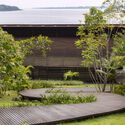
“We used indigenous skills with wood and chrome to construct the roof and also the 1.50m wide perimeter structure that “wrapps” the core of the building, protecting it from the weather and providing space for all vertical and horizontal circulation, such as balconies, balconies, and staircases. In this way, the life in the building is connected to the ocean in all times, visually, by allowing people to see and be seen, and also in terms of construction, using wood and thatch through local techniques.”


Cocoa Interpretation Center / Taller Con Lo Que Hay 4 + ENSUSITIO Arquitectura

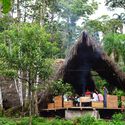
“All this infrastructure is built on the principles of the office”with what is there‘ (Loosely translated as with what is available), i.e. the use of traditional materials, local skills, and new technologies that are easy to learn and reproduce, enhancing ancestral knowledge, also in a contemporary context. All structures were built on massive boulders discovered at the site, thus developing a simple and easy technology using stone as the foundation, resulting in the unique structure of the project. Everything else is built with local materials and technologies; Bamboo structures are tied with thatched and thatched roofs. “


Gaviao Viewpoint Amazon Lodge / Atelier O’Reilly

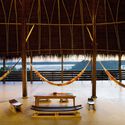
“The project was based on a sustainable approach that takes advantage of local climate, materials and building techniques. The riverside community has been building wooden boats for many years, passing on this knowledge from father to son. Due to the lack of construction workers in the area, the hotel was designed to be an upturned boat, using these techniques (…) Taking advantage of vernacular architecture, the project is built on stilts, creating interconnecting wooden decks, allowing ventilation below the building, thus reducing indoor temperatures.”


This article is part of the ArchDaily topic: Local Articles. Every month we explore a topic in depth through articles, interviews, news and projects. Learn more about our monthly topics. As always, at ArchDaily we welcome contributions from our readers; If you would like to submit an article or project, contact us.
.