Fashion designer Takada Kenzo, known worldwide as “Kenzo”, died at the age of 81 on October 4, 2020, due to complications from COVID-19. A year later, commemorations of his life and accomplishments continue, including a large retrospective of his work in Japan and a documentary about his life. Kenzo began his career in 1970 in Paris, where he lived for the rest of his life. His deep love for France returned to his adopted home and became a darling of the French fashion world. We spoke to Kushino Junko, a close friend from their school days together, about the man behind the legend.
Shocking late night phone call
“I used to see Ken-chan, as I called him, twice a year or so,” says Kushino Junko. “The last time we met was at a restaurant in Paris that served excellent Italian food – which is rare in Paris. It’s a private place, members only, but Ken-chan introduced me, and eventually I myself became a regular. For years, whenever I visited Paris, he would take me Always to the latest places everyone was talking about. He loved to entertain and show people around. During dinner he showed me pictures of some interior design work he was doing. I was working on a similar project for a hotel in Japan, and we excitedly began making plans to work together on Next time he comes to Japan….”
Eight months later, on the night of October 5th, Japanese time, news came of Takada’s death.
“It was about 1 am. I was getting ready for bed when I got a phone call to tell me he was dead. We had spoken in September, and he didn’t sound great at the time. But I never imagined it would be like that… I couldn’t believe it. I thought he was there. Something’s wrong. Had it not been for the epidemic, I would have flown to Paris immediately, I think.”
golden generation
The relationship between these two Japanese stars on the international fashion scene dates back to 1959, when Kushino (18 years old at the time) and Takada (one year older) were classmates at Bunka College of Fashion in Tokyo. Cushino remembers:
“He was still wearing a black student uniform from high school at the time, and glasses with thick black frames. Looking at him, you would have never guessed that he was studying fashion. Not many students in college in those days were really serious about making their careers in the world Fashion.In this sense, Ken-chan and I, along with Matsuda Mitsuhiro [later a designer at Nicole] and Kaneko Isao [later a designer at Pink House] They formed a small clique, like those who were really serious about what we were doing.
We used to spend all our time together, in and out of class. We spent hours in jazz cafes, went to the movies and kabuki together, hung out in each other’s apartments, stayed up all night talking about movies, music and books. In those days, Ken Chan lived in this miserable apartment. Right next to the railway tracks. The whole place was shaking and vibrating every time a train passed by. But because of that, the rent seemed really cheap!”
The four designers later became known as the “golden” generation of Bunka College of Fashion, and came to play a leading role in the Japanese fashion world in the years that followed. The foundations for this resounding success were laid by Koike Chi, the former principal of the college who instilled lessons in her young students who would stay with them for the rest of their careers.
Previously working alongside the likes of Yves Saint Laurent and Karl Lagerfeld in Paris, Koike was determined to provide her students with the latest, most realistic technology used by the leading designers in Paris.
“In those days, a lot of Japanese fashion design was still done using the same plane-cutting techniques used to make kimonos and other types of traditional Japanese clothing. But Koike-sensei taught the European method of draping, pulling the fabric into a simple “trunk”-like shape. Like a model.Being able to make these wonderful clothes using only fabric, scissors and pins – was an amazing revolutionary idea for us.She used to start the day’s lessons with what she called her ‘morning service’, reading us captions and comments on the latest articles from French fashion magazines. I think those lessons were a big part of why so many of us developed such a fascination with France.”
Japan was at the time at the height of the post-war period of high-speed economic growth. However, student life was far from luxurious.
“We all loved the music. We used to buy one record between us and sit and listen to it together. I had the same stereo as Ken-chan back in those days. I remember it costing 13,000 yen, paid in ten installments. Once I went to his place and noticed the speakers were missing He ran out of money and took them to the pawn shop! That was the case—there were times when we couldn’t even pay 1,300 yen.”
“He always followed in my footsteps!”
Despite the hardships of student life, Kushino and her friends set their eyes firmly on the future. And they weren’t afraid to work for what they wanted to achieve.
“Once a month, we’d collect sketches we made together and visit a clothing company or famous designer studio and ask them to rate our work. I remember when we went to raise money for our fashion show, the four of us together. In those days, we had no worries. It seemed natural. To look the world in the face and face the challenges that life has thrown at us.”
Kushino was first to be a hit in 1960 when she became the youngest-ever winner of the Sōen Prize, a prestigious award widely seen as a stepping stone to success for young designers of the era. Takada in particular was inspired by Kushino’s early success. Prompted by the award given to his “ally” and close friend, Takada took home the award the following year.
“He always followed in my footsteps! That was the case with the Sōen Award, and that was the case with Paris as well. I went to Paris for the first time in 1964, and soon after coming back to Japan I didn’t talk about anything else. So in the end he started saying He wants to go too.But at the time, the ticket to Paris cost about 300,000 yen.
“By that time, I was making fairly good money, but Ken Chan was still working as an employee of a normal company and was going to get about 20,000 yen a month back home. Then it turned out that his apartment was going to be demolished for redevelopment, and they had to pay him.” Compensation to get him to leave. He used that money for a trip to Paris at the end of the year. I remember he didn’t have the fare home. He literally went on a one-way ticket. But it never occurred to us that he would end up spending the rest of his life in France” .
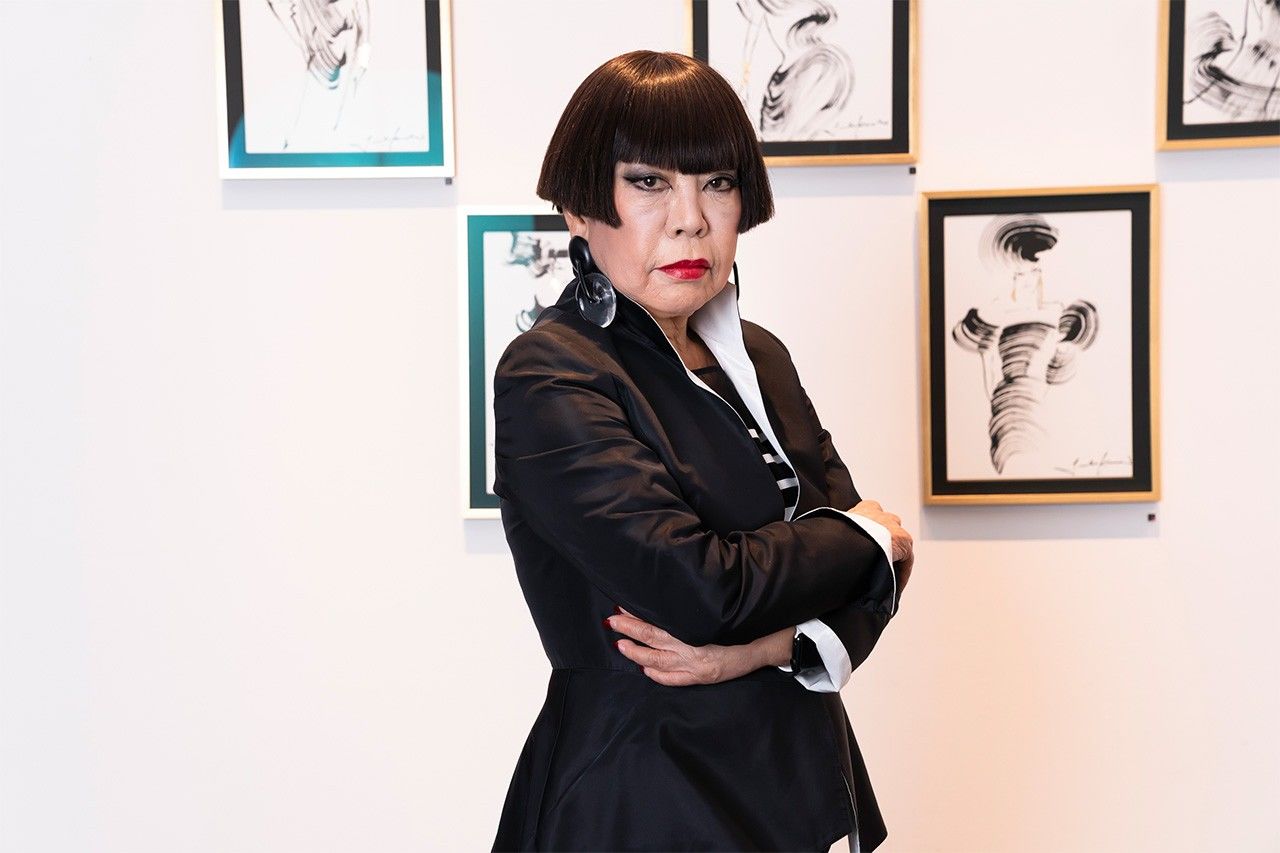
Throughout her long career at the forefront of fashion, Kushino Junko Takada Kenzo has been considered an ally, friend and inspiration (© Uwadaira Tsunebumi)
First successes in Paris
The close bond that developed between the designers remained unchanged even after Takada moved to Paris.
“In the early days, I think he started sketching designs and selling them to specifications. Just as in our school days, he took his sketches around town shops and magazines with the intention of criticizing them, but they were so good that people started buying them from him as they are. He used to say that in those days he experimented with Our study has served him well.
“His designs proved so popular that he soon opened his own store. I did what I could to help. I sent employees to Paris and helped finance the seed for his solo launch. I was determined to continue to support him for a while, whether the store was a success or not. But since his first collection The brand was an instant success, and it turns out he didn’t need any support from me or anyone else. I felt so happy for him – I shared in his success as if it were mine.”
In 1970, Takada opened his “Jungle Jap” store at Galerie Vivienne in the 2nd arrondissement of Paris. His first collection was a huge success, and his name became popular in French fashion circles. Kushino has her own theory about the reasons for her friend’s success.
“While he was still in Japan, he was obsessed with European fashion, like all of us. But I believe the experience of leaving Japan opened his eyes to some of the positive aspects of Japanese culture and traditional Japanese clothing. He began designing clothes that made bold use of the floral patterns used in Japanese fabrics. He began In moving away from the draping approach of European tailoring and using the plane-cut techniques used to make the traditional Japanese kimono. I think that was at least part of the reason why the clothes he designed seemed so exotic to Parisians.”
Kushino says another advantage of Takada as a designer is that he didn’t start a tailor in a fashion house.
“Up until that point, the fashion world had always been dominated by the haute couture model, with the designer creating original clothes for the client. People like Yves Saint Laurent and Karl Lagerfeld came through this system and their whole approach was basically that of a designer in a traditional store. fashion house. Ken Chan distinguished himself from other designers by introducing fashion to ordinary people, clothes that people could wear in their daily lives. In this sense, he pioneered the movement towards high-quality ready-to-wear. His designs attracted people who previously had nothing to do with the world of fashion.”
Closer to family
The friendship between the designers lasted until the end of Takada’s life. When Kushino visited Paris, she always stayed with Takada in Paris, and he would return the favor when he visited Japan, where he became a close family friend.
“Despite his success and fame, he was always down-to-earth and down-to-earth. There was nothing stuck in him. Everyone loved him for that, and appreciated his friends in return. He had his share of setbacks and disappointments, but it didn’t make any difference to his attitude. He was always smiling, And he’s always enjoying life. Reminds me of a hero from a movie.”
Kushino remembers how charming and handsome her friend was, even in his 80s.
“He seemed to get more and more handsome as he got older. We used to say to each other ‘Since we’re going to grow up together, let’s make sure we don’t let ourselves go, and try to keep our looks for as long as possible. And now he’s gone. I had more than a brother, closer than Family. I never thought of him as a rival. We studied together, enjoyed the good times together, grew up together. We went on travels and did stupid things together. When he lost someone close to him, I sat with him in silence all night, and he accompanied.”
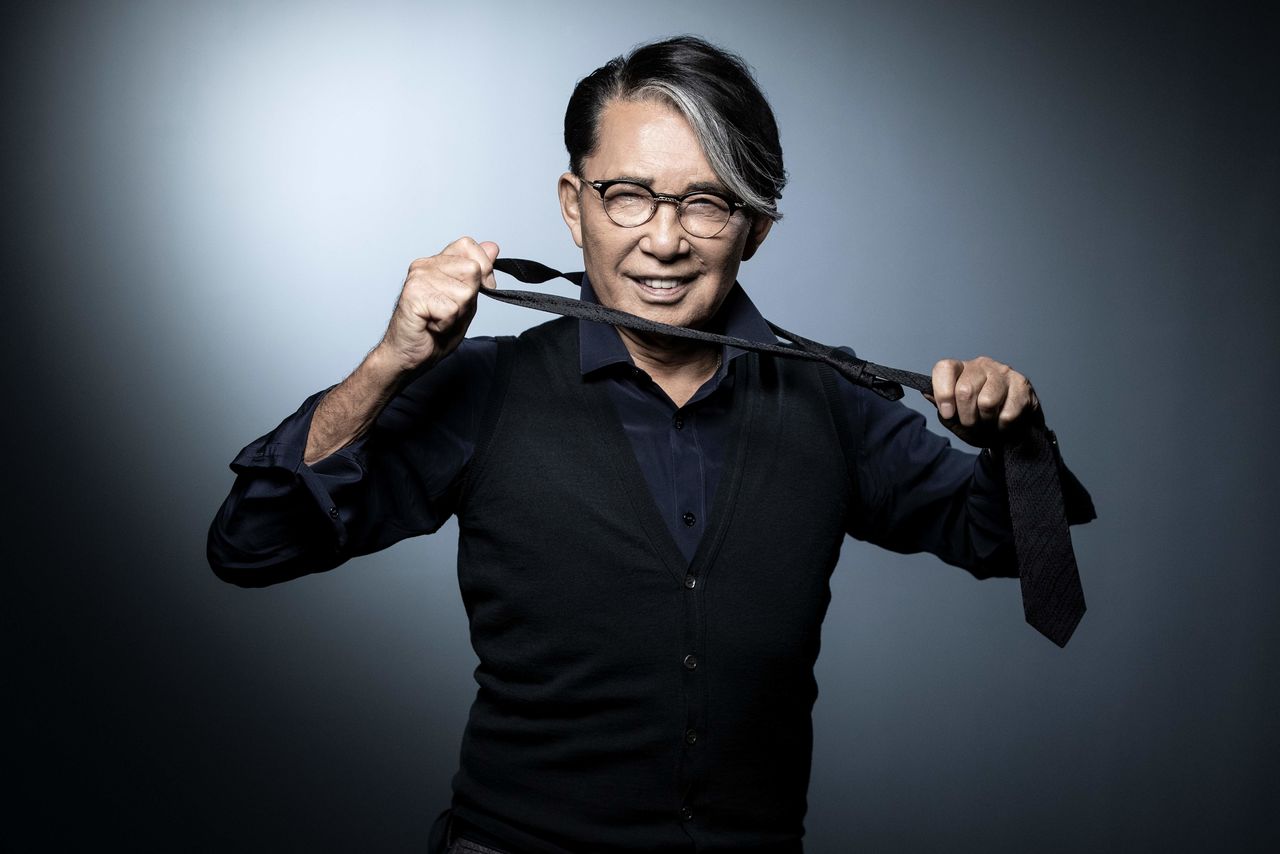
Even in his later years, Takada Kenzi exuded elegance and charm. (© AFP/Gigi)
Now Kushino is left alone to see the endless memories of his six-decade friendship.
“Because of the epidemic I could not even say goodbye. Perhaps that is why somewhere inside me I cannot accept that he is gone. It was a consolation to see how widespread his love and respect was. After his death Mr. President [Emmanuel] Macron and his wife released a statement that said: “My treasure has become synonymous around the world with a sense of elegance full of joy, flowers and colours.” “Paris is mourning one of its sons today,” Paris Mayor Anne Hidalgo said. He brought me home what an amazing feat he did. France and Paris meant a lot to us when we were kids, and they took him to their hearts as one of them.
“You only need to look at the booming state of ready-to-wear today to understand the scale of his achievement. It is largely thanks to him that people today are free to enjoy clothes and fashion as we wish. His name will live on forever in the history of fashion.”
(Originally published in Japanese. Banner photo: Designers Takada Kenzo, right, and Kushino Junko toast at a press conference marking the launch of Sabbath Premiere, a private brand owned by Seven & I Holdings. © Kyōdō.)
.